
Sheet Metal Fabrication Materials for Custom Parts
Choose a material that fits how your part will be formed, joined, finished and used.
ShincoMetal is a China-based sheet metal manufacturer producing custom components to project requirements. Use this guide to compare material options, identify manufacturing constraints and prepare a more complete request for quotation.
Already have a drawing? Send the material specification, quantity and finish requirements so we can discuss the part as a complete fabrication project.
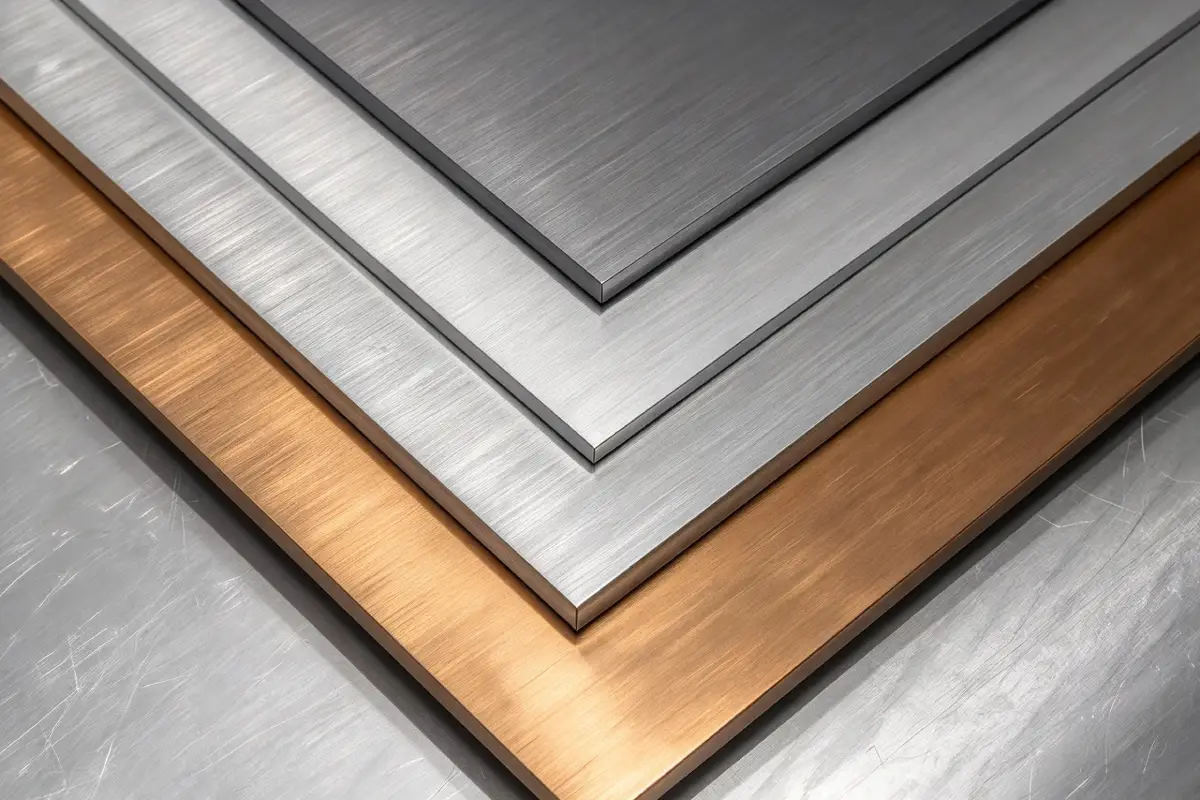
Compare Materials for Your Custom Part
Start with the operating environment and the features that control function. A lightweight cover, a welded cabinet and an electrical contact require different material decisions.
The grades below are selection references, not an inventory list or a guarantee of availability.
| Material | Why consider it? | Main fabrication consideration | Typical applications |
|---|---|---|---|
| Aluminum 5052-H32 | Useful balance of moderate strength, corrosion resistance and bendability | Inside radius, rolling direction and tooling still affect bending | Formed covers, housings and brackets |
| Aluminum 6061-T6 | Higher strength than 5052-H32 | Tight bends are more restrictive; welding reduces strength in the heat-affected zone | Panels and components requiring higher strength or machined interfaces |
| Stainless steel 304/304L | General corrosion resistance and good formability | Work hardening, springback and weld cleaning affect the finished part | Equipment panels, cabinets and trays |
| Stainless steel 316/316L | Better resistance to chloride pitting than 304 | Exposure conditions and crevice geometry remain important | Components for more demanding corrosive environments |
| Cold rolled steel 1008/1010 | Good formability in suitable sheet conditions and economical starting material | Usually needs a defined protective finish | Painted enclosures, chassis and brackets |
| Galvanized steel | Zinc coating provides corrosion protection | Cutting, forming and welding affect coating continuity | Panels and protective housings |
| Galvannealed steel | Zinc-iron coating commonly used beneath paint | Forming severity and paint preparation need consideration | Painted cabinets and fabricated panels |
| Copper C110 or C101 | High electrical and thermal conductivity | Temper, joint design and contact finish affect performance | Bus bars, conductive links and thermal components |
| Brass C260 | Useful cold formability in suitable tempers | Conductivity is lower than high-conductivity copper; environment affects suitability | Formed contacts, covers and decorative parts |
Yield and tensile strength depend on the exact alloy, product specification, temper, thickness and material condition. Use the applicable design data and material documentation rather than a single strength value for an entire metal family.
Material and Fabrication Scope at ShincoMetal
Start with the material, thickness and overall geometry of your part. The following routine working ranges provide an initial reference for project screening.
| Material | Routine Thickness Range | Fabrication Route |
|---|---|---|
| Aluminum 5052-H32 | 0.8–4.0 mm | Cut and bent covers, housings and brackets |
| Stainless steel 304/304L | 0.8–3.0 mm | Cut and formed panels, trays and enclosure components |
| Cold rolled steel | 0.8–6.0 mm | Cut, bent and welded brackets, chassis and enclosures |
| Aluminum 6061-T6, stainless steel 316/316L, galvanized and galvannealed steels, copper and brass | Reviewed by grade, condition and thickness | Material sourcing and the required processing route are assessed individually |
Our routine flat-blank envelope is up to 3,000 × 1,500 mm. This is a cutting reference, not a maximum finished-part size. Formed-part feasibility also depends on bend length, flange height, tool access, bend sequence and interference.
The ranges above are screening references rather than a guarantee that every geometry can be produced. Small flanges, tight radii, deep returns, holes close to bends and welded assemblies require drawing review. Requirements outside the routine range may also be submitted for assessment.
Specialist finishing is coordinated with external processing suppliers where required. Finish compatibility, masking, cosmetic requirements and any dimensional allowance must be agreed for the specific part.
For a project review, send the exact grade and condition, decimal thickness, flat or overall dimensions, drawing revision, quantity and finish requirements. Identify critical interfaces and tolerances so material selection, manufacturing sequence and inspection can be considered together. Any material substitution or design change requires approval before production.
How Material Choice Affects Fabrication
Aluminum: Balance Strength with Bendability
5052-H32 is a common starting point for bent housings and covers. For more readily formed, lightly loaded parts, 3003-H14 may also be worth evaluating.
6061-T6 can suit higher-strength requirements, but a tight bend that works in 5052 may crack in 6061-T6. Bend feasibility depends on temper, thickness, inside radius, rolling direction, tooling and the bending method.
Welding 6061-T6 changes local mechanical properties. Annealing or changing temper also changes the design basis and should be treated as an engineering decision.
For purchasing, specify the alloy, temper, decimal thickness and applicable product standard. ASTM B209/B209M is a common reference for aluminum sheet and plate.
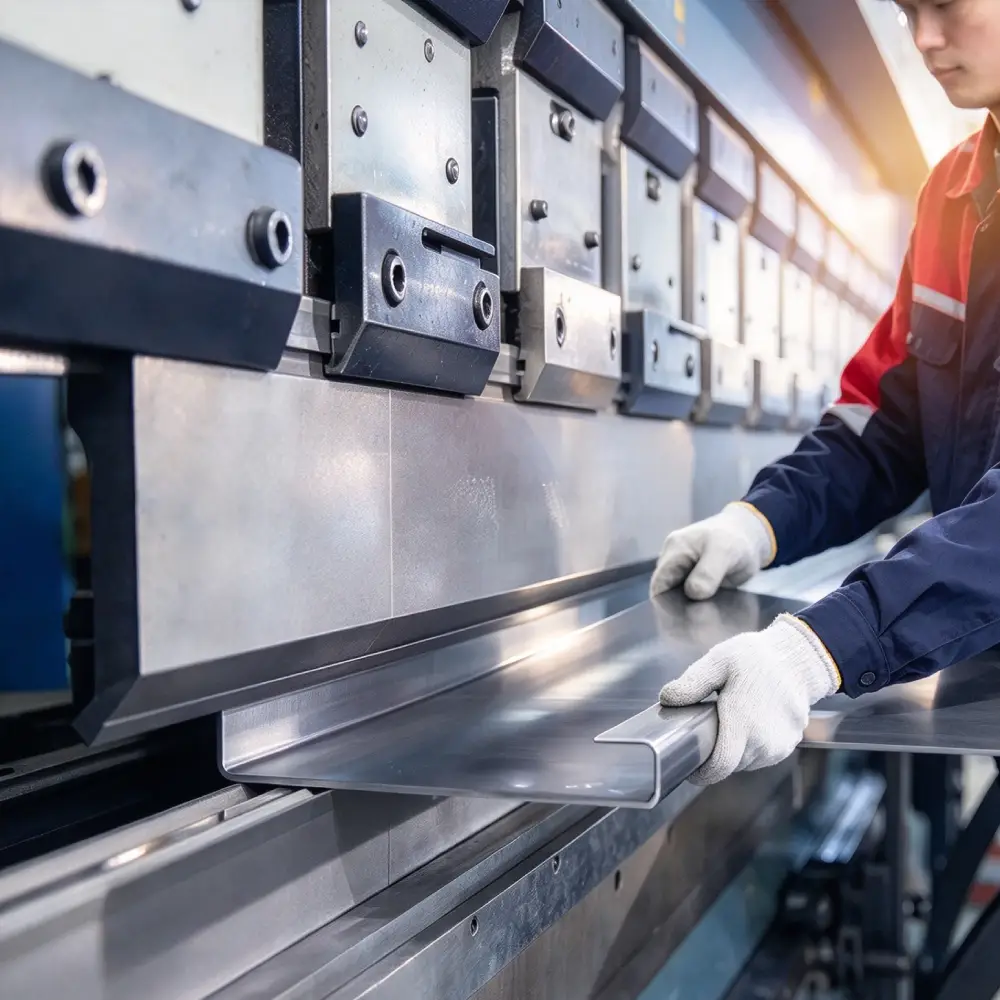
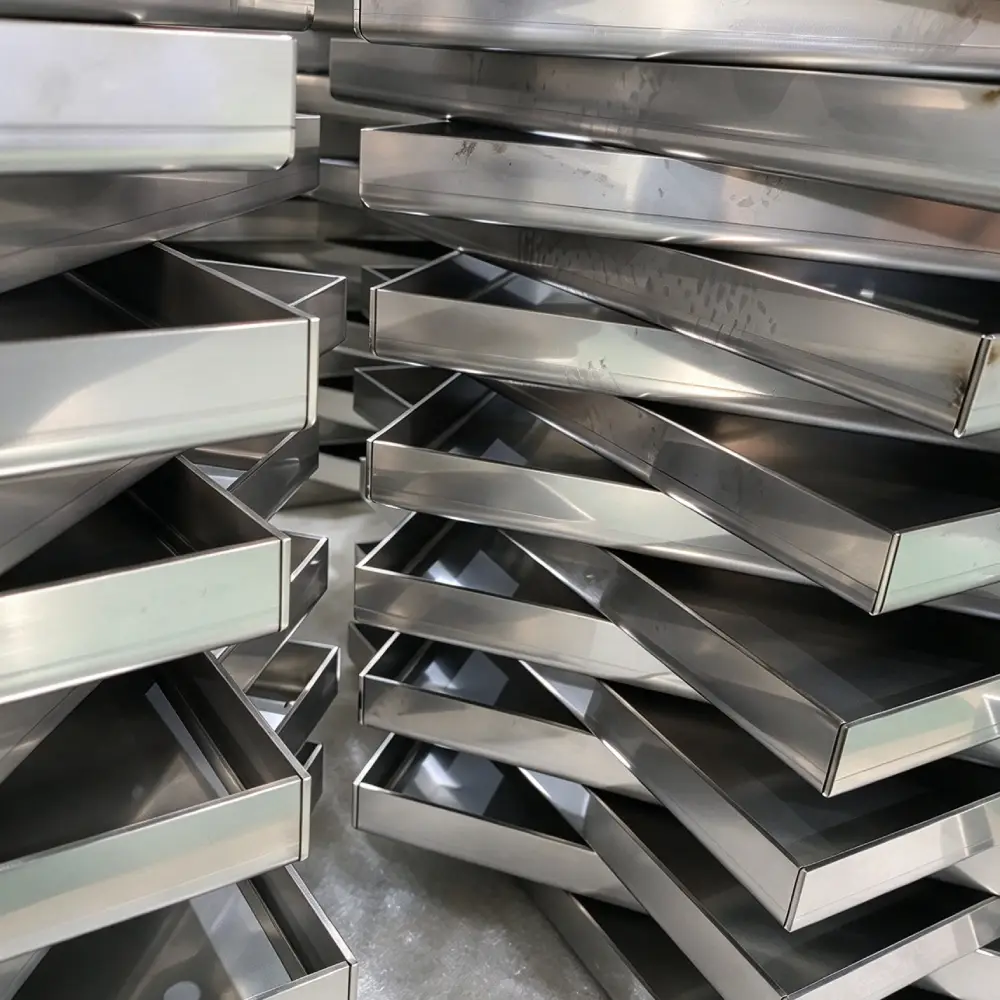
Stainless Steel: Consider Exposure and Surface Condition
304 and 304L suit many general equipment applications. Molybdenum in 316 and 316L improves resistance to chloride-related pitting compared with 304, but neither grade is immune to corrosion.
Temperature, salt concentration, cleaning chemicals, crevices and surface condition influence performance.
Stainless steel work hardens during forming, affecting forming force, springback and bend sequence. Low-carbon grades help reduce sensitization risk during welding, while weld cleaning and the final surface condition remain important.
For visible panels, define the finish, grain direction, weld locations and acceptable surface marks. A 2B mill finish and a No. 4 directional finish produce different results.
ASTM A240/A240M is a common specification reference for stainless steel sheet and plate.
Carbon and Coated Steels: Define the Protection System
Cold rolled steel is commonly considered for painted brackets, chassis and enclosures. Its corrosion protection depends on the selected finish and service environment.
Galvanized sheet has a zinc coating. Galvannealed sheet has a zinc-iron alloy coating and is commonly used beneath paint.
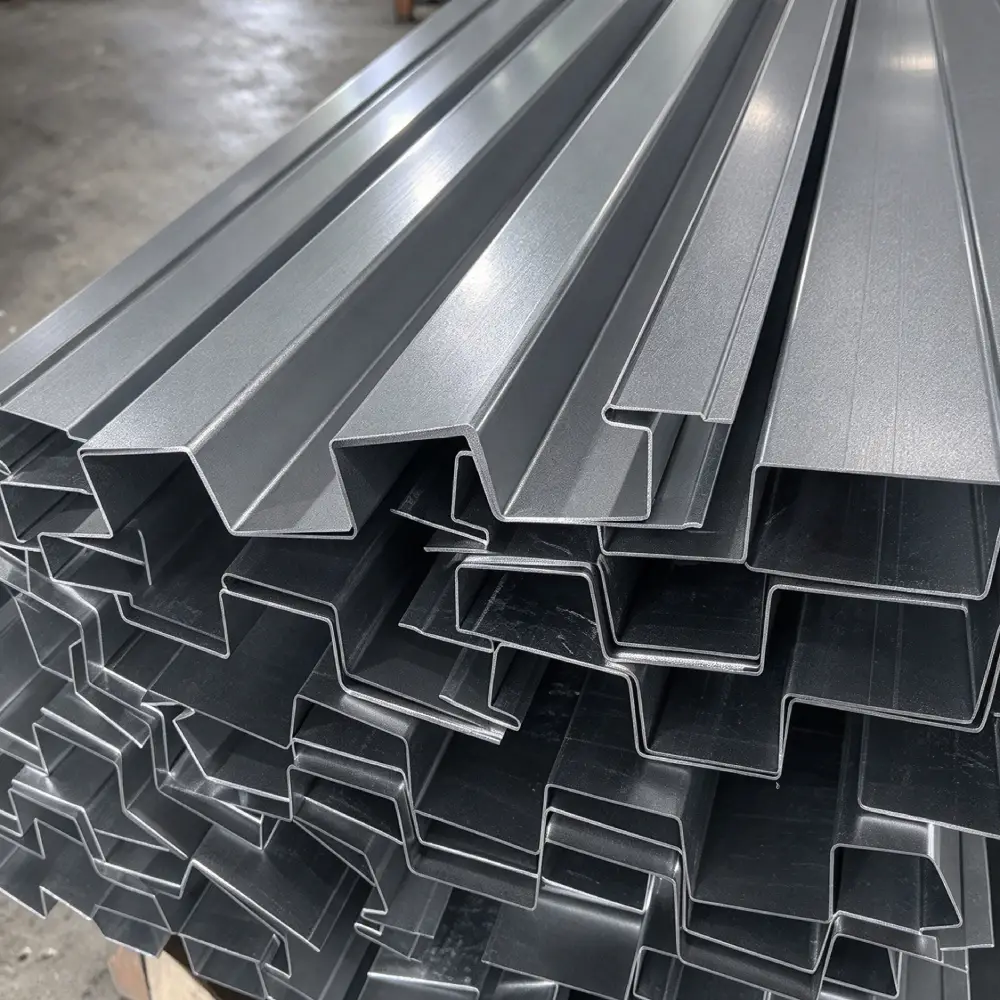
Cutting exposes edges, forming can damage coatings, and welded areas may need a specified method of restoring protection. Welding coated steel also requires appropriate process controls, including fume extraction.
G90 and A60 are coating designations, not base-steel grades or sheet thicknesses. For coated sheet, specify both the base-steel designation and coating requirement. ASTM A653/A653M is a common reference.
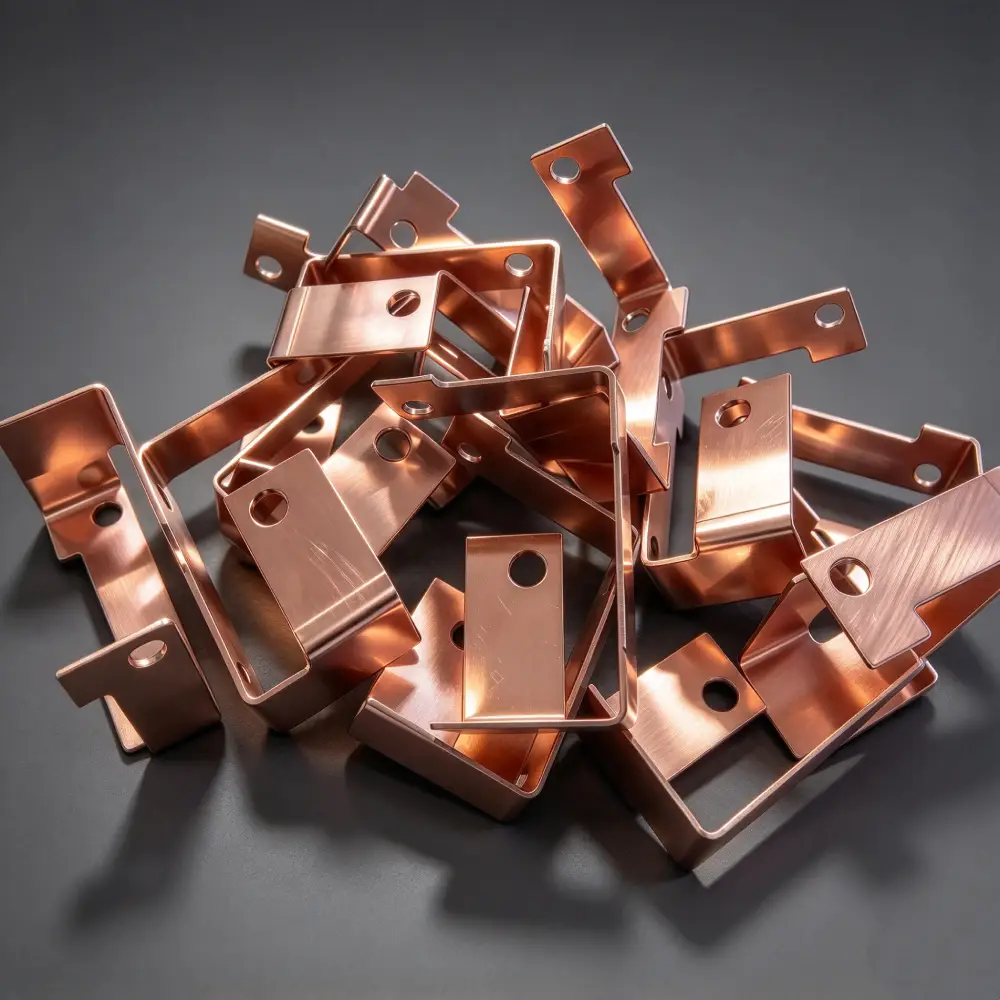
Copper and Brass: Specify the Functional Requirement
C110 electrolytic tough-pitch copper is widely used for electrical and thermal components. C101 oxygen-free electronic copper is considered where purity and oxygen content are important.
C260 cartridge brass offers useful cold-forming characteristics, although its conductivity is substantially lower than that of high-conductivity copper.
For electrical parts, conductivity alone does not determine current capacity. Cross-section, temperature rise, joint resistance, duty cycle and the installation environment also matter.
Specify the alloy, temper, electrical requirements and contact finish. ASTM B152/B152M is a common reference for copper sheet and strip; ASTM B36/B36M covers brass sheet and strip.
Specify Decimal Thickness, Not Gauge Alone
The same gauge number represents different thicknesses across metals. The values below are selected conventional nominal references, not stock availability or acceptance tolerances.
| Gauge | Carbon steel, in | Carbon steel, mm | Stainless steel, in | Stainless steel, mm | Aluminum, in | Aluminum, mm |
|---|---|---|---|---|---|---|
| 10 | 0.1345 | 3.416 | 0.1406 | 3.571 | 0.1019 | 2.588 |
| 12 | 0.1046 | 2.657 | 0.1094 | 2.779 | 0.0808 | 2.052 |
| 14 | 0.0747 | 1.897 | 0.0781 | 1.984 | 0.0641 | 1.628 |
| 16 | 0.0598 | 1.519 | 0.0625 | 1.588 | 0.0508 | 1.290 |
| 18 | 0.0478 | 1.214 | 0.0500 | 1.270 | 0.0403 | 1.024 |
| 20 | 0.0359 | 0.912 | 0.0375 | 0.953 | 0.0320 | 0.813 |
Use decimal inches or millimeters on manufacturing drawings, with the required thickness tolerance and applicable specification.
For coated sheet, clarify whether the stated thickness refers to the base metal or the coated product. Mill thickness tolerances depend on the specification and size; they are not a universal percentage.
Thickness variation affects stiffness, bend allowance and assembly clearance. Define critical interfaces around the finished part, including coating build where relevant.
Match the Finish to the Material and Function
A finish affects more than appearance. It can change corrosion behavior, electrical contact, dimensions and assembly fit.
The treatments below are options to evaluate, not a statement that every process is available for every project.
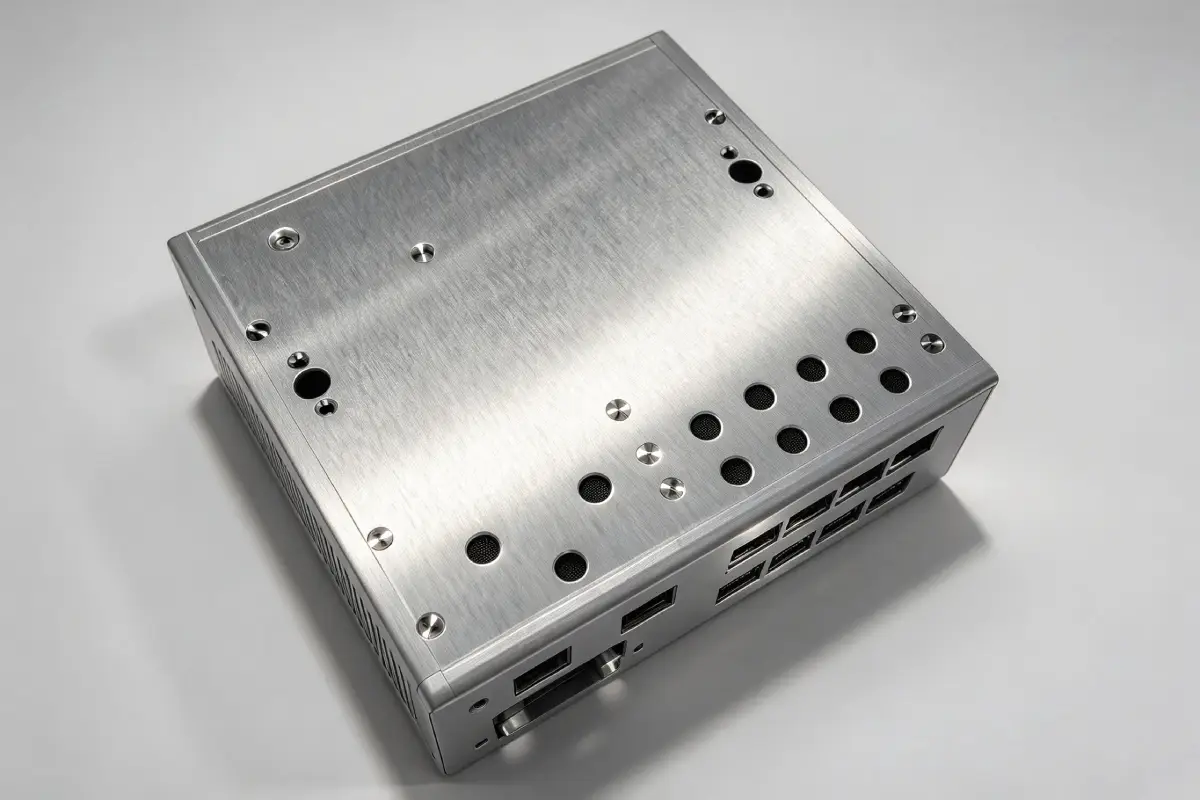
| Material | Treatment to evaluate | What to define |
|---|---|---|
| Aluminum | Type II anodizing or Type III hard anodizing | Alloy, coating requirements, appearance, fits, threads and masked areas |
| Aluminum | Chemical conversion coating | Applicable specification, class and type where required, electrical requirements and paint compatibility |
| Stainless steel | Passivation, such as to ASTM A967/A967M | Surface preparation and acceptance requirements; passivation alone does not remove weld heat tint |
| Stainless steel | Electropolishing | Permitted material removal, edge condition and critical dimensions |
| Cold rolled or galvannealed steel | Powder coating or e-coat | Pretreatment, coating thickness, color, texture, drainage and cure exposure |
| Carbon steel | Zinc electroplating, such as to ASTM B633 | Service condition, coating thickness, supplementary treatment and thread fit |
| Copper and brass | Application-specific plating or protection | Contact resistance, solderability and compatibility with mating metals |
Identify grounding points, electrical contacts, threads and precision fits that need masking or a different treatment.
For cosmetic parts, also define visible faces, grain direction and acceptable surface marks.
Check Geometry Before Finalizing the Material
Material thickness alone does not establish whether a part can be manufactured.
| Feature or operation | Conditions to review | Manufacturing implication |
|---|---|---|
| Cutting | Material, thickness, blank size, small features and edge requirements | Influences process selection and feature feasibility |
| Bending | Temper, inside radius, flange length, bend sequence and tool access | Influences cracking risk, springback and achievable geometry |
| Holes and cutouts | Feature size, edge distance and proximity to bends | Nearby forming can affect shape and position |
| Welding | Alloy, joint design, access, heat input and finish | Influences distortion, local properties and appearance |
| Hardware and assembly | Stack thickness, installation access and mating interfaces | Determines installation method and operation sequence |
| Tolerances | Functional datums, manufacturing sequence and inspection method | Establishes a workable acceptance plan |
Moving a hole away from a bend, opening an inside radius or simplifying a weld can reduce manufacturing difficulty. Any change needs to preserve function and remain consistent with the approved design.

Define Material and Finished-Part Acceptance
A useful quality requirement connects the incoming material to the features that matter on the finished component.
Material Identity and Traceability
A mill test report can identify the material designation, heat or lot, chemical composition and reported mechanical properties.
Traceability also needs a defined link between those records and the supplied parts, including after sheets are cut into smaller blanks.
Positive material identification can support alloy verification when included in the agreed scope. The method must suit the requirement: handheld XRF cannot reliably distinguish low-carbon stainless grades by carbon content.
State the required material records and traceability level in the RFQ.
Dimensions, Finish and Reporting
Inspection should follow the features that control assembly and function.
Hole positions, bend angles, mating faces and overall dimensions may need different measurement approaches. Coating acceptance may also require defined checks for thickness, coverage or appearance.
A first-article report records an initial part against agreed requirements. It does not replace a production acceptance plan.
For exposed surfaces, define viewing conditions, visible faces and permitted marks. Packaging should then protect the agreed finish through suitable separation, interleaving or edge protection.
Understand What Drives Cost and Lead Time
The lowest sheet price does not necessarily produce the lowest finished-part cost.
| Driver | Effect on the quotation |
|---|---|
| Grade, temper and thickness | Availability and material sourcing influence cost and schedule |
| Part geometry | Nesting yield, bend count, tool access and weld length affect processing |
| Quantity and repeat demand | Setup and material utilization influence unit cost and production planning |
| Finish and cosmetic requirements | Preparation, grain alignment, handling and masking add operations |
| Hardware and purchased components | Component availability and installation affect the production sequence |
| Inspection and documentation | Testing, traceability and reporting require defined resources |
| Packaging and delivery | Part size, finish protection, destination and transport method affect logistics |
Include the delivery target and any permitted alternatives with the drawing. Material substitutions and design changes need approval before production.
Frequently Asked Questions
Should I choose 5052 or 6061 aluminum?
5052-H32 is commonly considered for formed sheet parts. 6061-T6 offers higher strength but is more restrictive for tight bends, and welding reduces strength locally.
Choose around the load case, geometry, bend requirements and joining method rather than strength alone.
Can I specify thickness by gauge alone?
Decimal thickness is clearer because gauge conventions differ by material.
Specify the alloy, condition, nominal decimal thickness, units and required thickness tolerance.
Are material reports and first-article reports included?
Do not assume they are included by default. Identify the required records, traceability level and report format in the RFQ so the documentation scope can be agreed with the order.
What determines order quantity and delivery time?
Material sourcing, setup, geometry, finishing, inspection and quantity influence order economics and scheduling.
Send the required quantity, expected repeat demand and delivery target for a project-specific discussion.
Is 316 stainless steel always better than 304?
316 generally offers better resistance to chloride pitting and usually has a higher material cost. The appropriate choice depends on exposure, temperature, cleaning chemicals and geometry.
Neither grade resists every corrosive environment.
What is the difference between galvanized and galvannealed steel?
Galvanized sheet has a zinc coating. Galvannealed sheet is further processed to form a zinc-iron alloy coating and is commonly selected for painted applications.
The base grade, forming severity, coating requirement and exposed edges still need consideration.
Can I propose an alternative material?
Yes. Include the proposed alternative and the functional requirements with your inquiry.
A substitution can change stiffness, corrosion behavior, bendability, welding and finish. It needs engineering approval before becoming the production specification.
Request a Quote for Your Custom Sheet Metal Parts
Send your drawings and project requirements for a fabrication quote. Include the material, thickness, quantity, finish and delivery destination so we can review the scope.
Factory Address
Building 1, No.8, Second Street, Huangjiang Town,
Dongguan City, Guangdong Province
Email
contact@shincometal.com
Phone / WhatsApp
+86 13392819510
Factory Visits
Please contact us in advance to arrange a factory visit.