
Custom Sheet Metal Enclosures Built Around Your Equipment
ShincoMetal is a China-based sheet metal manufacturer for custom equipment housings. Define the enclosure around your component layout, mounting interfaces, service access, and operating environment.
Send your CAD model and drawings with the material, finish, and quantity required for a project-specific enclosure review.
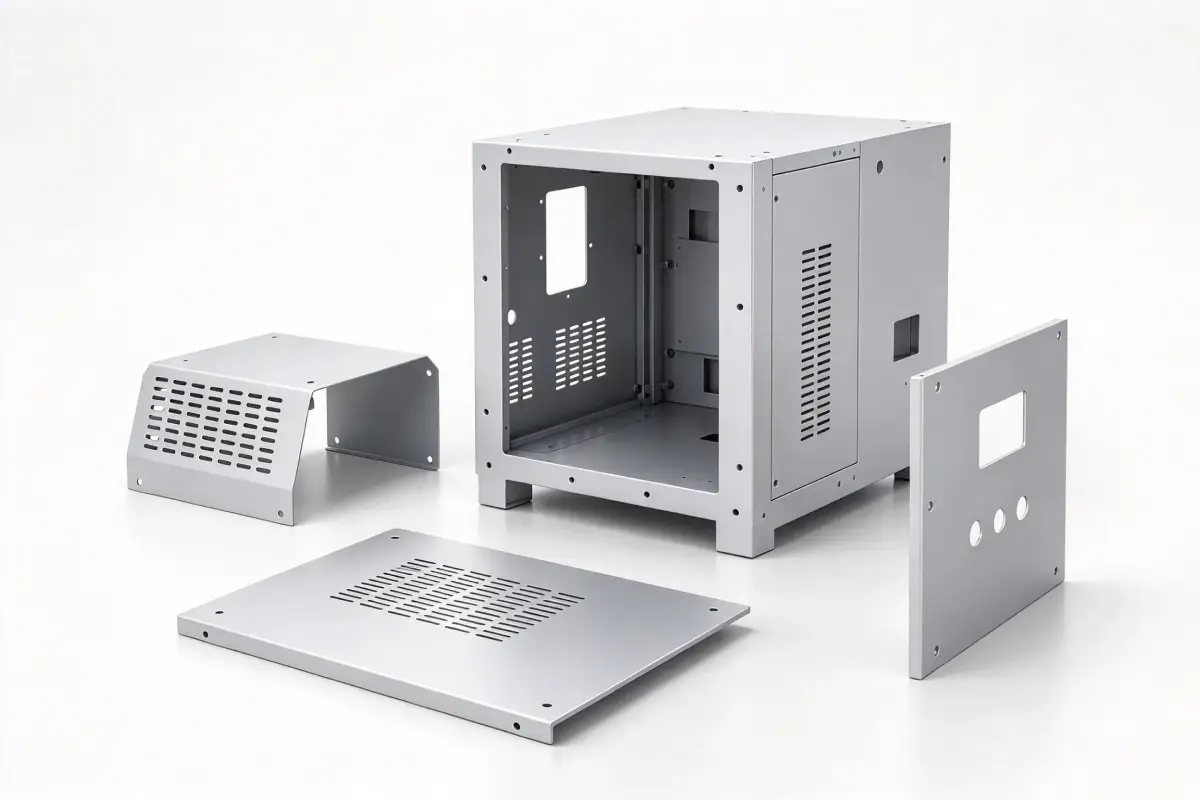
Check Your Project Against Our Fabrication Scope
The first step is to establish what the finished enclosure includes. A fabricated housing, an enclosure with installed mechanical hardware, and a complete electrical assembly have different production and acceptance requirements.
| Project area | Proposed ShincoMetal supply scope |
|---|---|
| Enclosure construction | Bent panel housings, welded boxes, removable-cover enclosures, and hinged-door cabinets. |
| Materials | Cold-rolled steel, aluminum 5052-H32, stainless steel 304/316L, and galvanneal steel, subject to grade and availability review. |
| Sheet thickness | An initial review range of 0.8–3.0 mm for the materials above; suitability depends on material, bend geometry, joint design, and enclosure size. |
| Enclosure size | Typical project review up to 1,000 × 800 × 600 mm for the finished housing; individual part size, bend access, welding access, and finishing route require drawing review. |
| Mechanical assembly | Installation of specified hinges, latches, mounting plates, rails, gland plates, and compatible fasteners. |
| Surface finishing | Powder coating and selected material-specific treatments, with the in-house or external processing route identified in the quotation. |
| Electrical work | Wiring, control-panel assembly, and complete equipment certification are excluded unless expressly included in the quotation. |
These ranges are intended for initial screening. They are not blanket approval of every combination of material, size, geometry, and finish.
For a project outside the stated scope, include the drawings and the requirement that needs review.
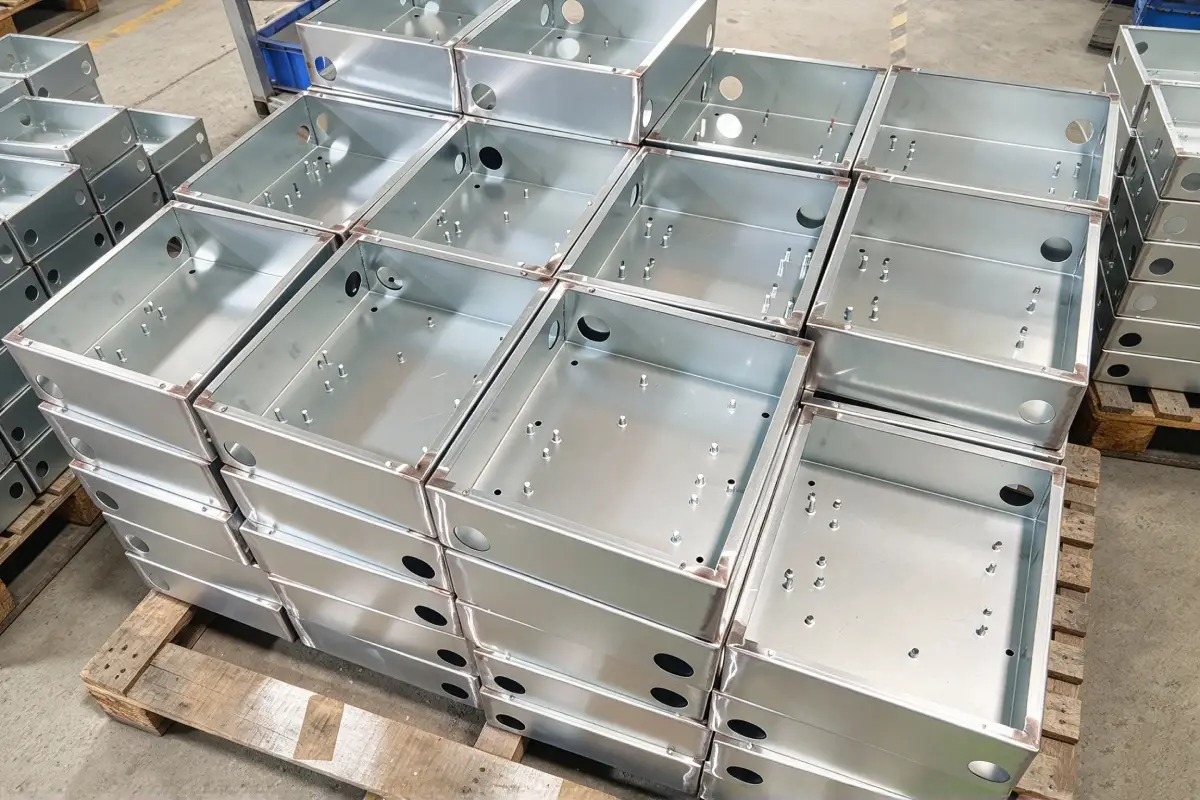
From Flat Parts to a Working Enclosure
An enclosure must do more than meet its outside dimensions. It needs usable internal space, aligned mounting features, accessible fasteners, and doors or covers that operate after finishing.
| Fabrication stage | What needs to be controlled | Why it matters |
|---|---|---|
| Cutting and openings | Hole positions, connector cutouts, ventilation patterns, and edge condition | Components and cable entries must fit without obstructing nearby features |
| Bending | Inside radius, flange depth, bend sequence, and tooling access | Formed parts must preserve internal clearance and mating geometry |
| Joining | Joint access, weld sequence, heat input, and finishing allowance | Joining can affect alignment, distortion, appearance, and sealing details |
| Hardware installation | Sheet compatibility, hole preparation, edge distance, and insertion access | Fasteners and fittings must function without damaging adjacent features |
| Finishing and assembly | Coating allowance, masking, contact surfaces, and hardware fit | The finished enclosure must assemble and operate as intended |
Define the Interfaces That Control Fit
Identify mounting datums, equipment attachment points, connector openings, door gaps, and the space needed to install or remove components.
Cut-part accuracy and finished-assembly accuracy are different requirements. Bending, welding, hardware installation, and coating can each affect the final relationship between features.
Apply tighter tolerances to the interfaces that control function. A uniform tight tolerance across every dimension can increase cost without improving equipment fit.
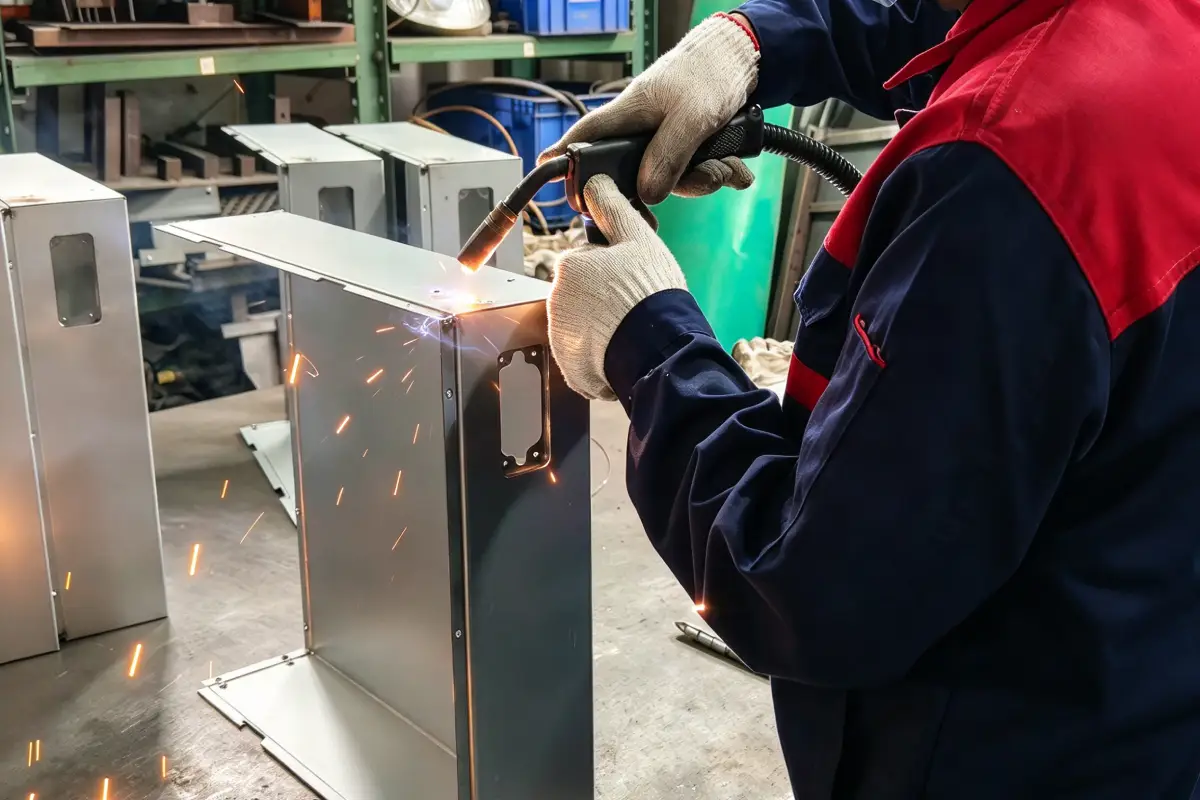
Manufacturing Evidence Relevant to Your Enclosure
A useful fabrication example shows how the enclosure was made and which requirements controlled the work. A finished exterior photo alone cannot establish mounting accuracy, joint quality, or environmental performance.
For a comparable enclosure, assess the body construction, internal features, door or cover arrangement, and the interfaces that matter to your equipment. Inspection evidence should relate to those features and the relevant drawing revision.
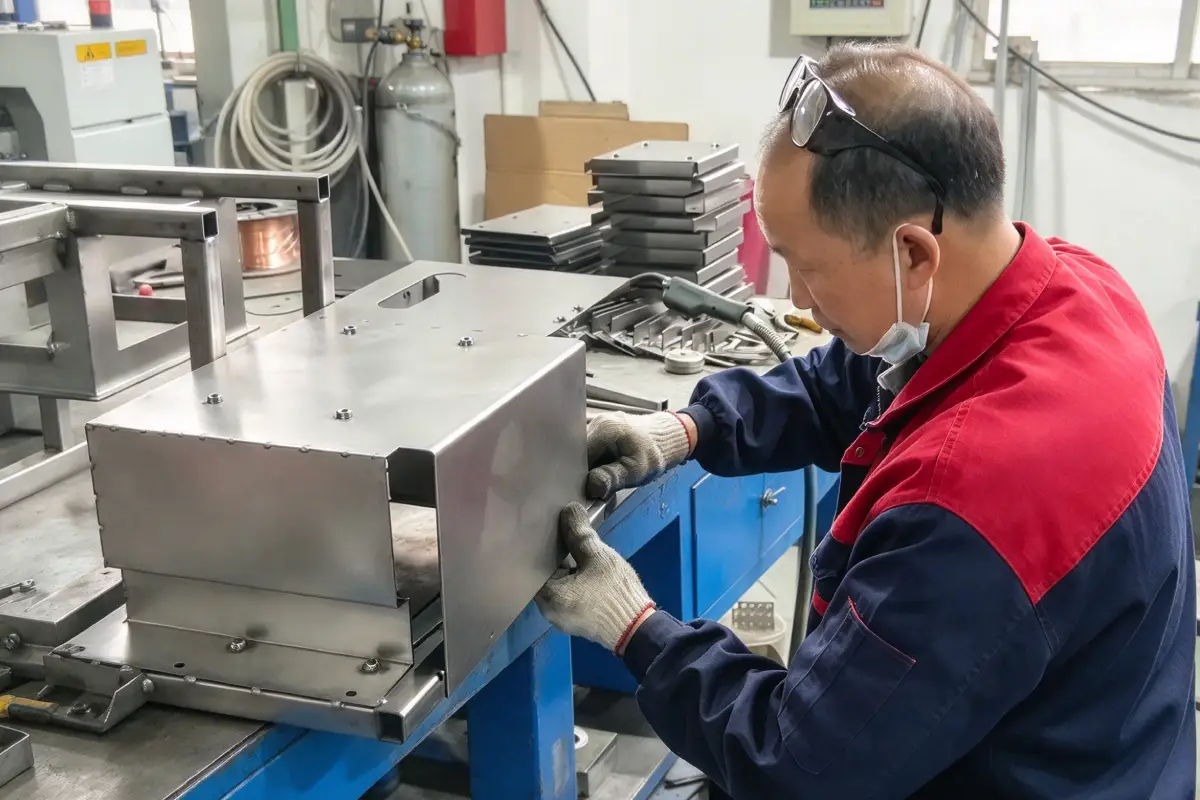
Materials and Finishes for the Operating Environment
Material selection balances weight, stiffness, forming behavior, corrosion exposure, appearance, and total fabrication cost. Grade and temper matter, particularly where tight bends or welded joints are involved.
| Material option | Where it may be useful | Points to resolve |
|---|---|---|
| Aluminum 5052-H32 | Weight-sensitive housings and formed panels | Bend geometry, joining method, finish appearance, and galvanic contact with other metals |
| Stainless steel 304 | General corrosion exposure and exposed-metal finishes | Cleaning conditions, weld appearance, surface treatment, and cosmetic handling |
| Stainless steel 316L | Applications needing greater resistance to chloride pitting than 304 | Actual exposure, surface condition, crevices, and cleaning practices |
| Cold-rolled steel | Stiff housings with a protective coating | Corrosion protection, coating coverage, cut edges, and damaged surfaces |
| Galvanneal steel | Painted sheet metal housings | Welding effects, exposed edges, and preparation for the selected coating |
This table explains material tradeoffs. Actual supply availability is subject to the confirmed fabrication scope and quotation.
Specify the Finish as Part of the Assembly
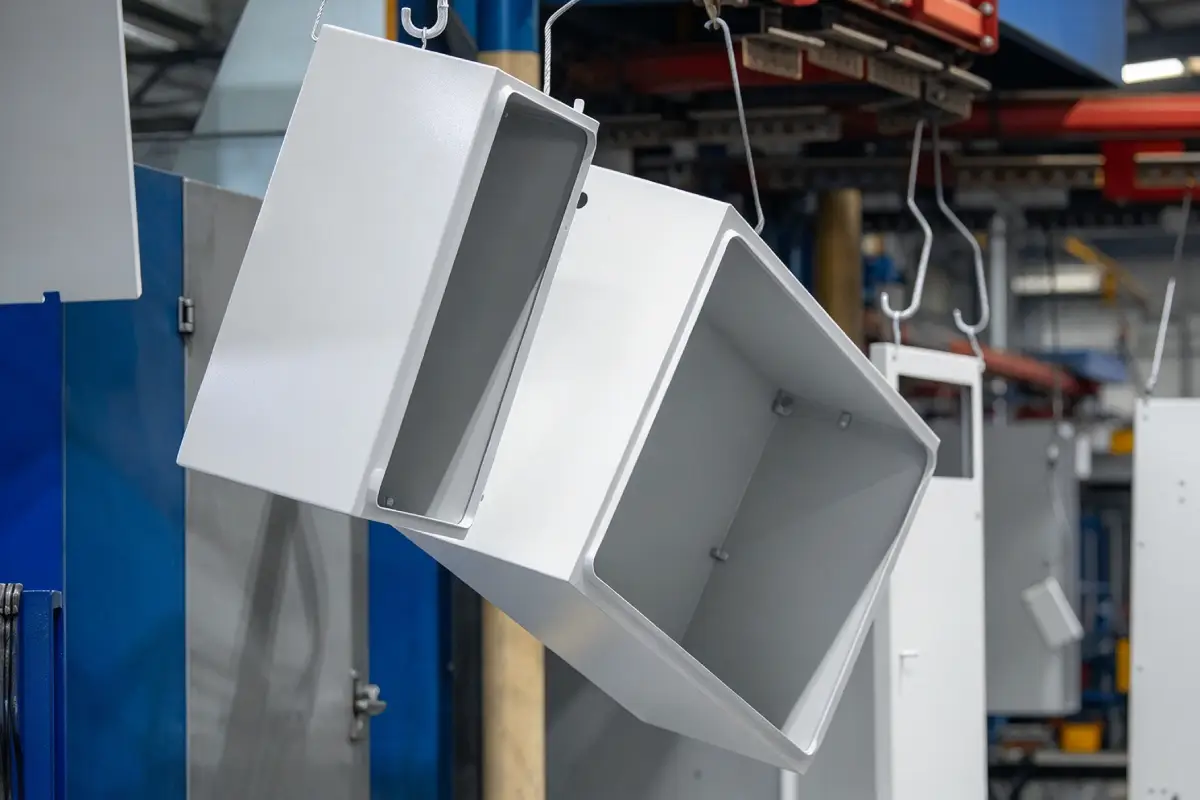
For powder coating, define color, texture, cosmetic surfaces, and any required coating specification. Pretreatment and coating chemistry affect performance as well as appearance.
Threaded features, sliding fits, gasket interfaces, and electrical bonding points may need masking or dimensional allowance.
For aluminum treatments or stainless steel passivation, identify the required specification and acceptance criteria. A treatment name alone does not define the finished result.
Protection, Cooling, and Electrical Interfaces
Start with the operating environment and the required evidence. Indoor dust, outdoor rain, washdown, corrosive exposure, heat, and electromagnetic compatibility lead to different enclosure decisions.
NEMA and IP Requirements
NEMA enclosure Types and IEC IP ratings use different criteria and test methods. They are not interchangeable designations.
Material selection or a closed appearance does not establish a rating. Seams, doors, gaskets, latches, cable entries, and ventilation features all affect the relevant enclosure configuration.
State the exact target requirement, test configuration, and evidence needed. An IP rating does not by itself establish corrosion resistance, and certification of a component does not automatically certify the completed enclosure or control panel.
Thermal Management and EMI Interfaces
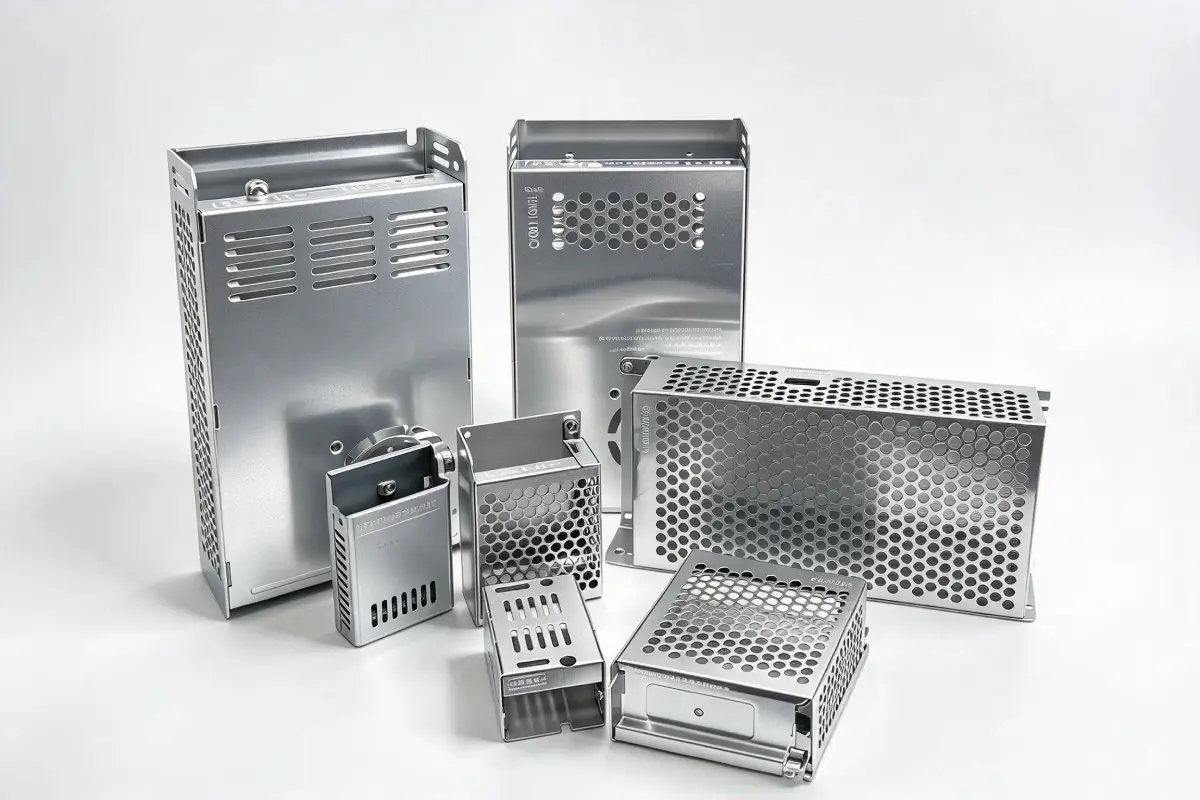
Ventilation openings, filters, fans, and cooling-unit cutouts affect internal temperature, available space, and ingress protection. A sealed outdoor cabinet requires a different cooling approach from a ventilated electronic chassis.
EMI shielding depends on electrical continuity across panels, doors, seams, and cable entries. Coatings can interrupt conductive contact, while suitable bonding surfaces and gaskets can support it. Final EMC performance depends on the complete equipment configuration.
Agree Who Designs and Verifies Each Requirement
The proposed supply boundary is fabrication to agreed drawings and specifications; thermal design, EMC validation, ingress testing, and regulatory approval are separate activities unless expressly included in the quotation.
Where a third-party evaluation is required, test responsibility, sample configuration, cost, and acceptance criteria must be agreed before the work is released.
Quality Checks Tied to Your Drawing
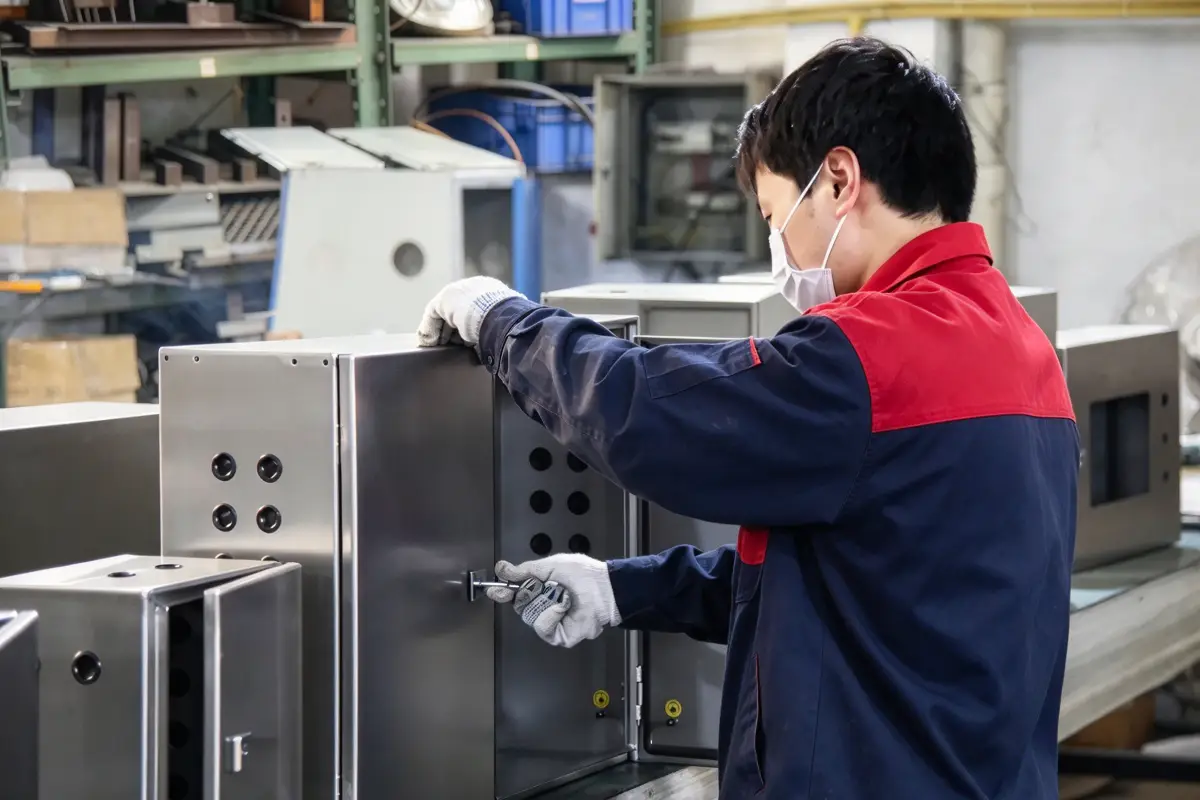
Enclosure inspection should focus on the features that determine fit, operation, and acceptance. A measuring-equipment name alone does not explain how those features are checked.
The proposed inspection approach below must be confirmed against ShincoMetal’s actual procedures and the project requirements.
| Characteristic | Proposed verification approach |
|---|---|
| Mounting holes and component interfaces | Check specified feature locations from the agreed drawing datums using suitable dimensional equipment or a verified fixture. |
| Formed geometry and welded alignment | Check relevant formed dimensions and assembly references after the operations that can change them. |
| Door, cover, and hardware function | Check opening, closing, removal, fastener engagement, and interference in the agreed assembly condition. |
| Surface finish | Inspect agreed cosmetic zones and specified coating characteristics; coating thickness or adhesion checks are included where agreed and applicable. |
| Documentation | Supply dimensional reports, material records, finish records, or first-article documentation where included in the order scope. |
Ingress, corrosion, load, and EMC evaluations require their own defined methods and conditions. Routine dimensional inspection does not establish these performance results.
Prototype Approval and Repeat Production
A prototype can reveal issues that are difficult to resolve from individual part dimensions alone: cable routing, connector access, cover removal, fastener reach, and installed-component clearance.
For a first build, identify what must be approved before repeat production. A useful approval basis includes the drawing revision, critical interfaces, cosmetic expectations, and any agreed inspection records.
For recurring orders, define the release quantity, forecast, purchased hardware, packaging, and delivery destination. These details affect material planning and the production route.
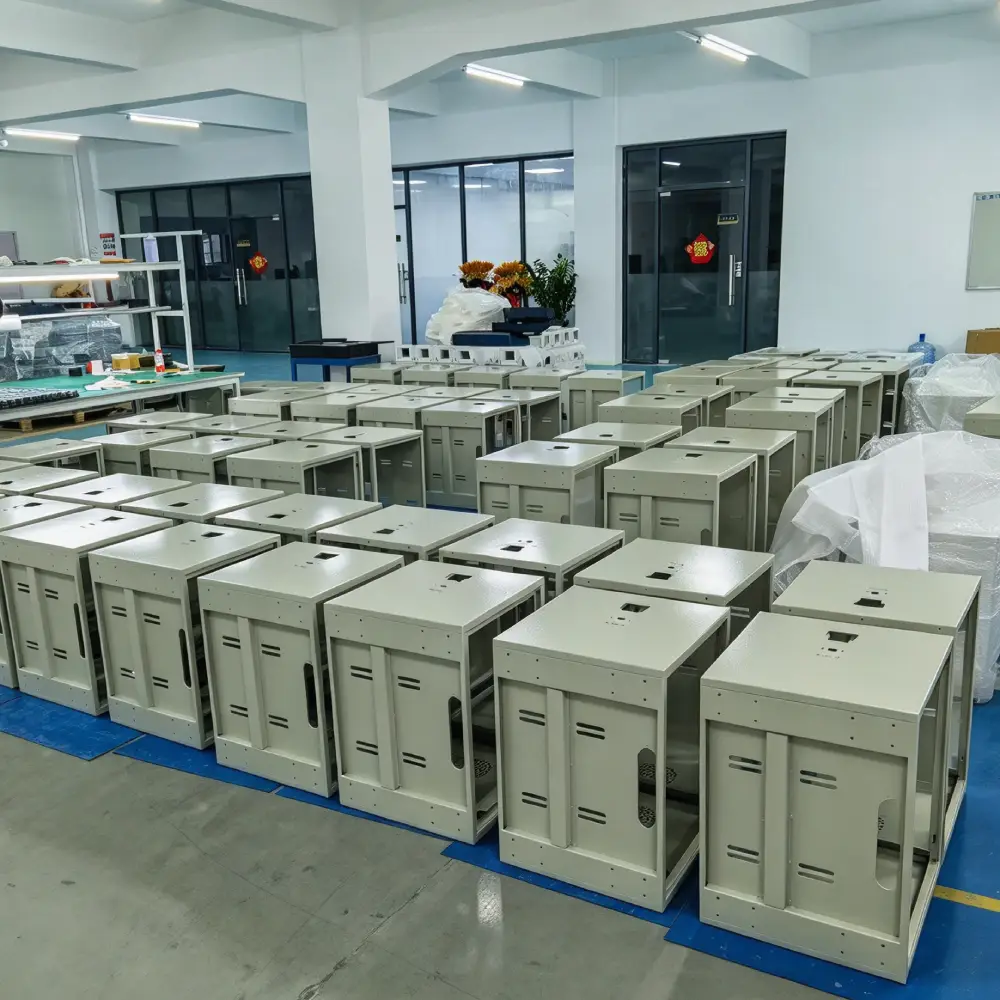
ShincoMetal’s proposed workflow is drawing and scope review, quotation, agreed first-build approval where required, and production against the approved revision.
Engineering changes should identify the new revision and the affected features. Any impact on work already started, cost, inspection, and delivery needs agreement before the revised scope proceeds.
Frequently Asked Questions
Can I start with a sketch or an existing enclosure?
A sketch, photographs, or sample dimensions can explain the initial requirement. Production needs a defined drawing basis covering geometry, interfaces, material, and finish. Identify any drawing-development assistance needed in your inquiry so the responsibility can be agreed.
Can a custom enclosure meet a NEMA or IP requirement?
A custom enclosure can be designed around a specified protection requirement, but the result depends on the complete configuration and the applicable evaluation. State the exact requirement and evidence needed. Do not infer a rating from material, appearance, or an individual component.
Who owns dedicated tooling or fixtures?
Ownership, storage, maintenance, replacement, and any transfer rights depend on the order agreement. Where dedicated tooling or fixtures are required, define these terms alongside the associated charges.
What affects the price and delivery schedule?
Material availability, enclosure size, quantity, joint construction, finishing, purchased hardware, inspection, and packaging all affect the quotation. A complete drawing package reduces uncertainty, but the delivery commitment must be established for the agreed order scope.
What tolerances should an enclosure drawing include?
Identify the mounting interfaces, connector openings, and cover fits that control function. Cut-part tolerances, formed dimensions, and welded-assembly tolerances need separate consideration. State deburring and edge-breaking requirements where edges affect handling or fit.
How are engineering changes handled during an order?
Provide the revised drawing, its revision identifier, and a clear change summary. Changes can affect material already cut, formed parts, fixtures, finishing, and inspection. The resulting scope, cost, and timing need agreement before revised work proceeds.
How should finished enclosures be packaged?
Packaging should account for weight, protruding features, cosmetic surfaces, and transport conditions. Surface separation, corner protection, restraint, and suitable pallet or crate design address different damage risks. Include specific packaging requirements in the delivery scope.
Request a Quote for Custom Sheet Metal Enclosures
Tell us about your equipment housing needs. Share your project’s material, finish, quantity, and operating conditions, along with a drawing link, so we can define the exact fabrication scope.
Factory Address
Building 1, No.8, Second Street, Huangjiang Town,
Dongguan City, Guangdong Province
Email
contact@shincometal.com
Phone / WhatsApp
+86 13392819510
Factory Visits
Please contact us in advance to arrange a factory visit.